The cold October rain drummed relentlessly against the canvas of the royal pavilion as King Henry V's guards made their rounds through the English camp. It was the night of 24th October 1415, and tomorrow would bring either glorious victory or devastating defeat against the French at Agincourt. When the guards approached their sovereign's tent for the midnight watch, they discovered something that would send ripples of concern throughout the camp: the King of England had vanished.
What happened next would become one of the most extraordinary episodes in royal history—a tale of faith, leadership, and divine intervention that would echo through the centuries and inspire countless monarchs who followed in Henry's muddy footsteps.
A King's Desperate Hour
The situation facing Henry V on that rain-soaked night was nothing short of catastrophic. His army of approximately 6,000 men—many weakened by dysentery contracted during the siege of Harfleur—faced a French force that outnumbered them more than four to one. Contemporary chronicles suggest the French army numbered anywhere from 20,000 to 30,000 men, including the flower of French nobility, heavily armored knights, and seasoned men-at-arms.
Henry, then just 28 years old, carried the weight of a kingdom on his shoulders. This was no mere military campaign—it was a crusade to reclaim what he believed was his rightful inheritance in France. The young king had staked his crown, his reputation, and the lives of thousands of Englishmen on this audacious venture.
As his courtiers and military advisors settled into an uneasy sleep, Henry felt the burden of command more acutely than ever. The responsibility for every man in that muddy field rested with him, and by all military logic, dawn would bring disaster. It was then that the king made a decision that would define not only his reign but the very essence of English kingship for generations to come.
Into the Darkness
When Henry's guards discovered his empty tent, panic threatened to spread through the camp. A missing king on the eve of battle was an ominous portent that could shatter morale entirely. Captain searches were quickly organized, with trusted knights quietly scouring the camp and surrounding countryside.
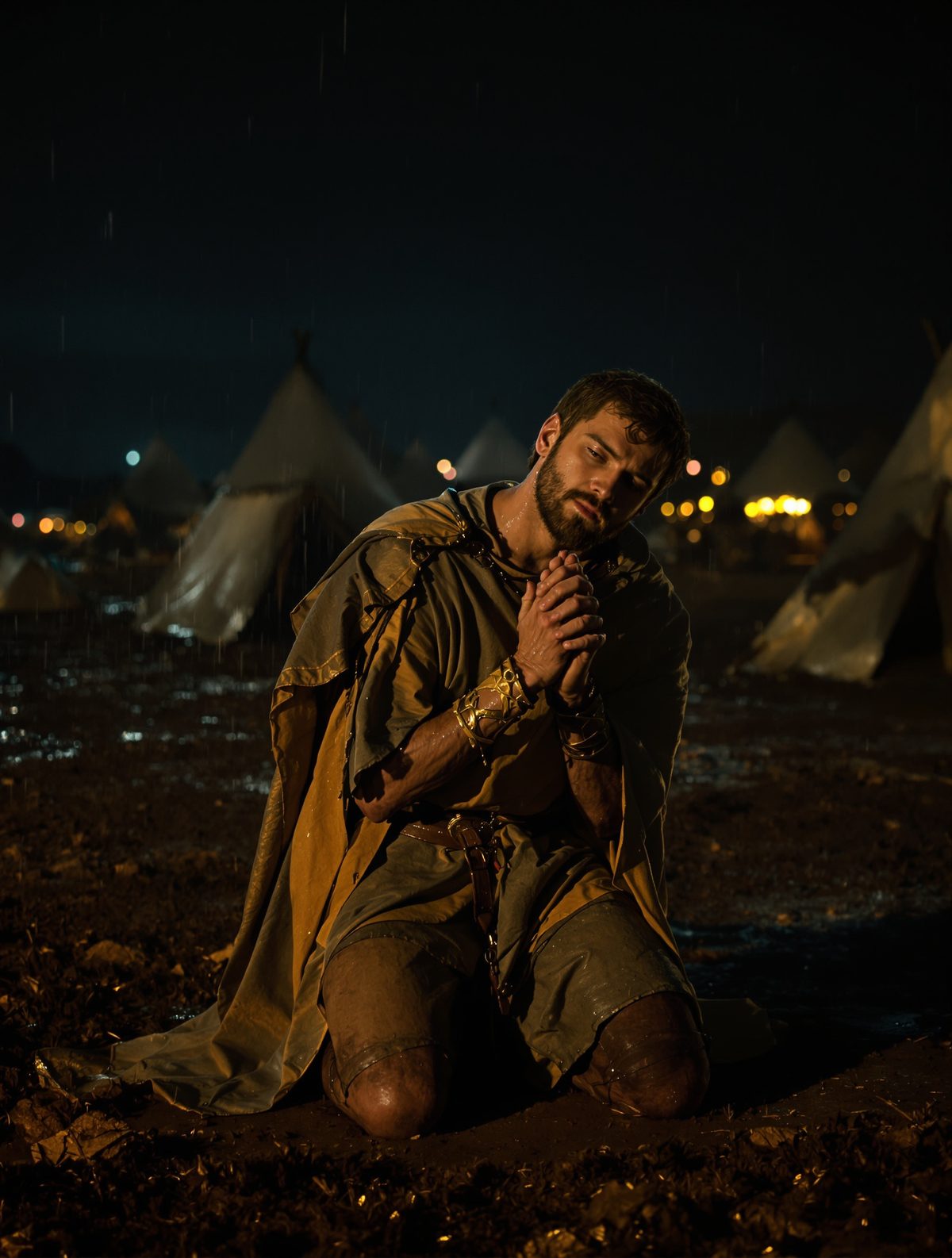
They found their sovereign in a muddy field some distance from the main encampment, kneeling alone in the driving rain. Contemporary accounts, though varying in specific details, agree on the essential facts: Henry had been there for hours, his royal garments soaked through, praying with an intensity that seemed to consume his entire being. The image is remarkable—here was a king who could have been warm and dry in his pavilion, instead choosing to submit himself to the elements and to divine mercy.
The guards, recognizing the sacred nature of what they witnessed, maintained a respectful distance. They understood instinctively that their king was engaged in something far more crucial to the coming battle than any military strategy session or last-minute preparations. Henry was placing his kingdom, his army, and his own soul in the hands of the Almighty.
The Warrior King's Faith
Henry's midnight vigil reflected the deep religious conviction that characterized medieval kingship. Unlike the more ceremonial role of modern constitutional monarchs, medieval kings were believed to rule by divine right, serving as God's representatives on earth. This sacred responsibility weighed heavily on Henry, who genuinely believed that his success or failure at Agincourt would reflect divine judgment on his cause.
The young king's piety was well-documented throughout his reign. He regularly attended multiple masses each day, maintained a rigorous schedule of private prayer, and consulted closely with his chaplains on matters both spiritual and temporal. His decision to spend the night before Agincourt in solitary prayer was entirely consistent with his character—a man who understood that kingship was as much a spiritual calling as a political one.
What makes this episode particularly poignant is its very human dimension. Stripped of the pageantry of court, the elaborate protocols of kingship, and the comfort of royal privilege, Henry appeared before God as simply as any common soldier. In that muddy field, he was not Henry V, King of England and France, Lord of Ireland—he was merely a young man desperate for divine guidance in humanity's darkest hour.
Miracle at Agincourt
When dawn broke on October 25th, 1415, Henry emerged from his vigil transformed. Witnesses reported a calm confidence in their king that seemed almost supernatural. As the English army formed up for battle, Henry moved among his men with serene assurance, offering words of encouragement and embodying the steady leadership they desperately needed.
What followed defied every expectation and military precedent. The Battle of Agincourt became one of the most stunning upset victories in military history. The English longbowmen, positioned strategically by Henry's tactical genius, devastated the French cavalry charges. The heavy autumn rains that had soaked the king during his prayers turned the battlefield into a quagmire that trapped the heavily armored French knights, making them easy targets for the more mobile English forces.
Contemporary chronicles record English casualties at fewer than 100 men, while French losses numbered in the thousands, including much of the French nobility. Among the English dead were only four men of noble rank, while the French lost three dukes, multiple counts, and over 90 lords—virtually an entire generation of French aristocratic leadership.
The victory was so complete, so utterly improbable, that both English and French chroniclers attributed it to divine intervention. Henry himself never claimed personal credit for the triumph, instead giving thanks to God for what he saw as a clear sign of divine approval for his cause.
A Legacy of Faith and Leadership
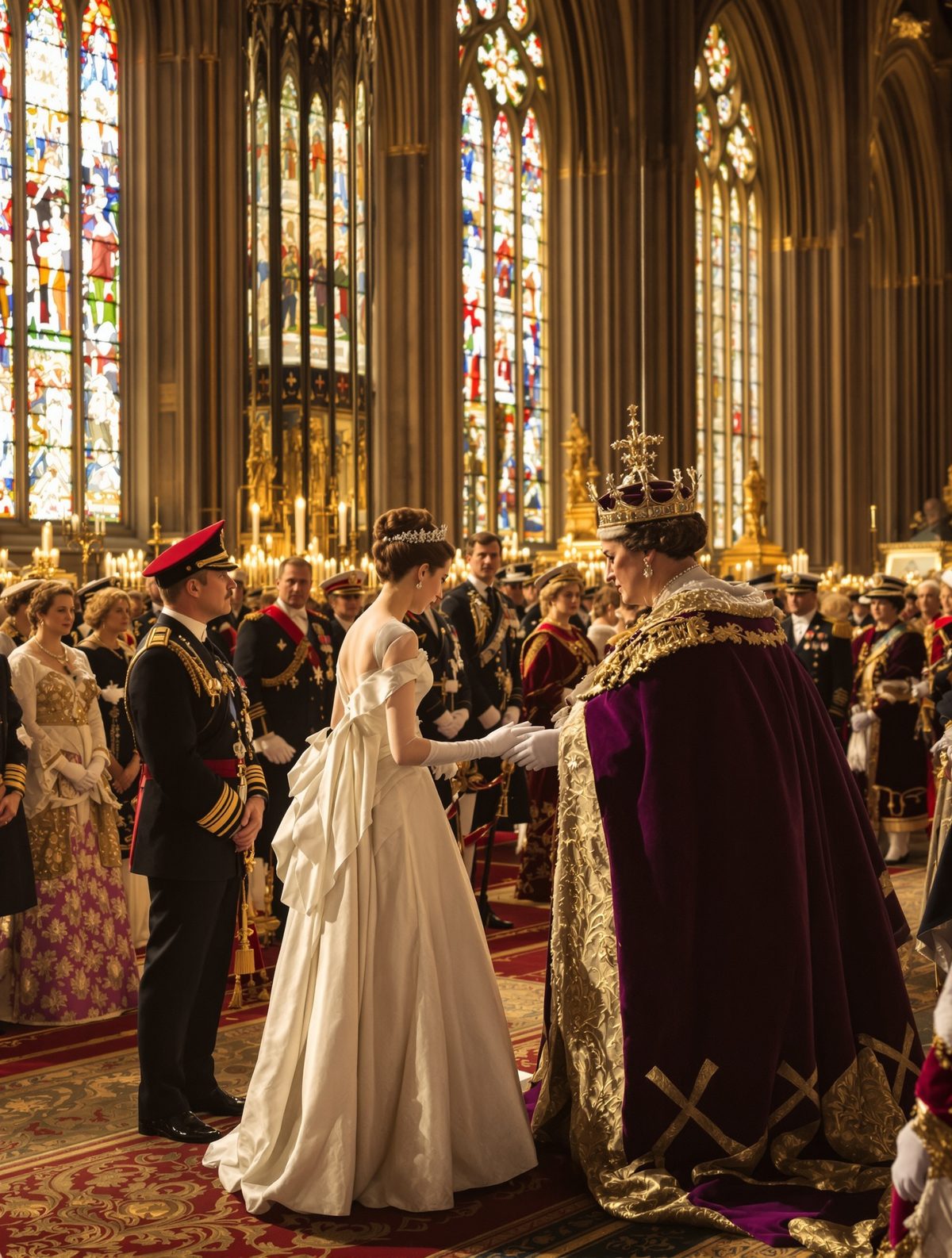
The story of Henry's midnight vigil at Agincourt has resonated through six centuries of English and British royal history. It established a template for royal leadership that combined practical governance with spiritual responsibility—a tradition that continues to this day. When our late Queen Elizabeth II spoke of her coronation as a sacred commitment made before God, or when King Charles III reflects on his role as Defender of the Faith, they echo the same understanding of divine service that drove Henry to his knees in that muddy field.
The image of the young king praying alone in the rain has inspired countless artistic interpretations, from Shakespeare's immortal dramatic treatment to modern historical novels and films. Yet beyond its dramatic appeal, the episode reveals something profound about the nature of true leadership. In choosing prayer over strategy sessions, solitude over counsel, and humility over royal privilege, Henry demonstrated that genuine authority flows not from earthly power alone but from a deeper source.
The victory at Agincourt secured Henry's reputation as one of England's greatest warrior kings, but his midnight vigil reveals something even more significant—a monarch who understood that wearing the crown meant bearing sacred responsibilities that no amount of royal prerogative could diminish. In our modern age, when leadership is often measured by poll numbers and public approval, Henry's example reminds us that true authority requires the kind of inner strength that can only be forged in the crucible of prayer, reflection, and genuine humility before the divine.
The rain-soaked field where Henry knelt in prayer may be lost to history, but the example he set continues to illuminate the path of principled leadership. In choosing faith over fear, service over self-interest, and divine guidance over human wisdom, he achieved not only military victory but something far more enduring—a legacy of royal leadership that continues to inspire nearly six centuries later.