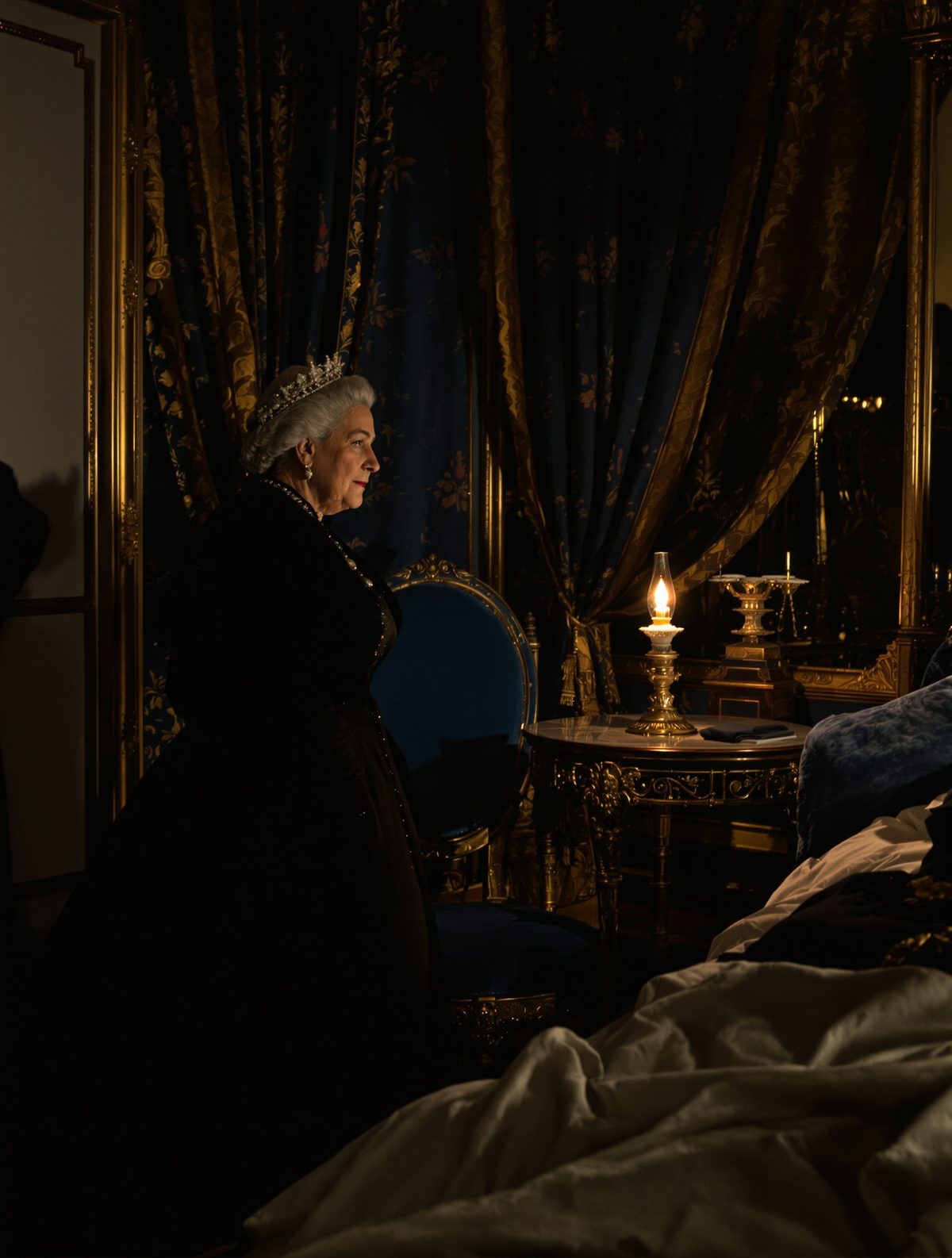
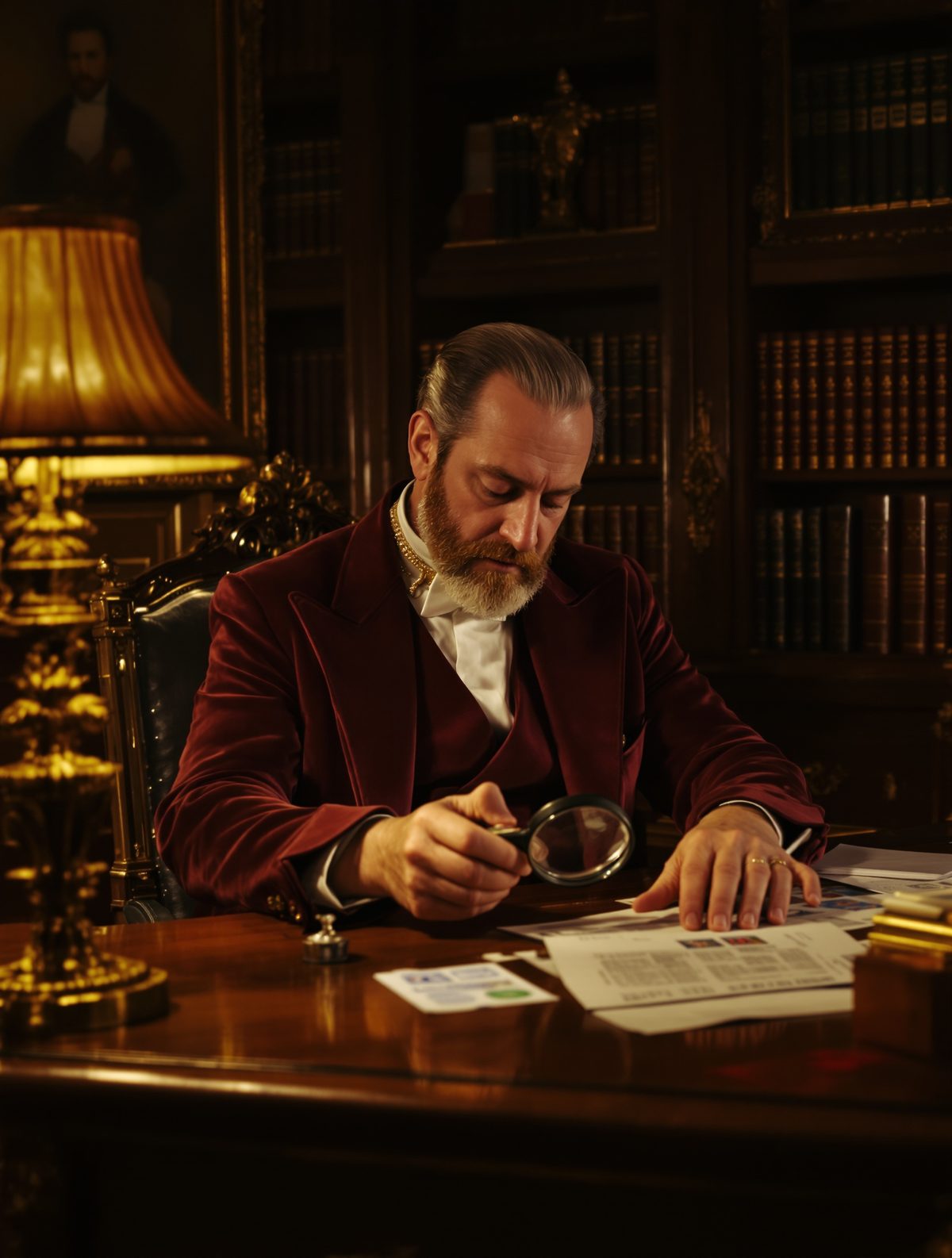
As the great clock tower of Westminster chimed midnight across London, a solitary figure made his way through the dimly lit corridors of Buckingham Palace. While his millions of subjects slumbered peacefully across the Empire, King George V was beginning what would become the most cherished ritual of his reign. Armed with nothing more than a magnifying glass and a pair of tweezers, the King-Emperor was about to embark on a journey that would take him to every corner of his vast dominions—one tiny, perforated square at a time.
The Boy Prince's Paper Passion
The seeds of King George V's extraordinary philatelic obsession were planted long before he ever imagined wearing the crown. As a young naval cadet, the future monarch began collecting stamps with the methodical precision that would later characterise his approach to kingship. What started as a schoolboy hobby in the 1870s evolved into something far more profound—a lifeline to the wider world during his years at sea, and later, an intimate connection to every corner of the Empire he would rule.
Prince George's early collection was modest by royal standards, but his dedication was absolute. Fellow naval officers recalled how he would eagerly await mail deliveries at foreign ports, not for letters from home, but for the exotic stamps that adorned the envelopes. Each new acquisition represented a piece of geography, a fragment of history, a glimpse into distant cultures that most Britons would never see.
By the time he ascended to the throne in 1910, George V had already amassed what experts considered one of the finest private collections in Europe. Yet it was during his reign that this passion transformed from mere hobby into sacred ritual, providing the monarch with something increasingly rare in royal life: genuine solitude and personal joy.
Midnight in the Royal Study
The King's private study at Buckingham Palace became a sanctuary unlike any other room in the royal residences. While the state apartments glittered with priceless art and furniture, this modest chamber was furnished with the practical tools of a serious philatelist. Custom-built cabinets lined the walls, each drawer meticulously labelled and organised according to the King's exacting system. A large desk dominated the centre of the room, its surface perpetually covered with albums, catalogues, and neat rows of stamps awaiting classification.
Night after night, as the palace settled into silence, King George V would slip away from his royal duties to lose himself in this miniature universe. The ritual was sacred: he would don his reading glasses, arrange his tools with military precision, and begin the delicate work of examining, sorting, and mounting his latest acquisitions. Palace servants grew accustomed to seeing light emanating from under the study door well into the early hours of the morning.
The King's collection was no casual accumulation of pretty pictures. He approached philately with the same methodical thoroughness he brought to statecraft, maintaining detailed records of every purchase, trade, and gift. His particular fascination lay with the stamps of the British Empire—those tiny ambassadors that carried his own image to the furthest reaches of his dominions. Through them, he could trace the expanding reach of British influence, the development of colonial postal systems, and the evolution of imperial identity.
A King's Collection Grows
Word of the King's passion spread throughout the philatelic world, transforming stamp collecting from a quirky hobby into a pursuit worthy of serious attention. Dealers, diplomats, and colonial administrators began seeking rare specimens to present to their monarch, knowing that few gifts would be received with greater enthusiasm than a particularly elusive stamp or cover.
The royal collection grew to legendary proportions during George V's reign. He acquired entire sheets of the world's first postage stamp—the Penny Black—and possessed what many considered the finest collection of British colonial issues ever assembled. His agents scoured auction houses from London to Hong Kong, often bidding against wealthy American collectors who were just beginning to recognise the investment potential of rare philatelic material.
The Times noted with amusement that the King could identify the printing date and watermark variety of virtually any British Empire stamp at a glance—a skill that proved rather more useful than one might expect when reviewing postal regulations and colonial correspondence. Foreign ambassadors learned to research their own countries' postal history before audiences with the King, as he was quite likely to inquire about printing errors or design variations with the enthusiasm of a true connoisseur.
The Human King Behind the Crown
Perhaps most remarkably, the King's midnight stamp sessions revealed a man of unexpected depths beneath the formal exterior demanded by his position. Palace staff spoke fondly of encountering their monarch in the corridors during these nocturnal wanderings, finding him more relaxed and approachable than during official duties. Freed from the weight of ceremony, surrounded by his beloved collection, George V displayed a boyish enthusiasm that few outside his immediate family ever witnessed.
The King's expertise became so renowned that the Royal Philatelic Society—of which he served as patron—regularly consulted him on matters of authentication and historical significance. He took particular pride in identifying previously unknown varieties and errors, contributing scholarly articles to philatelic journals under the modest byline "A Collector." His insights helped establish the scientific study of stamps as a legitimate field of historical and technical research.
During the tumultuous years of the First World War, when the very survival of his Empire hung in the balance, the King's midnight retreats to his study provided essential psychological refuge. While the world burned around him, these quiet hours among his stamps offered continuity, order, and hope. Each carefully mounted specimen represented not just postal history, but the enduring connections that bound his far-flung dominions together.
A Legacy in Miniature
By the time of King George V's death in 1936, his collection had become one of the world's great philatelic treasures—a achievement all the more remarkable for being driven purely by personal passion rather than royal obligation. The collection he bequeathed to his successors represented not just monetary value, but a unique window into the mind and character of a monarch who found profound meaning in the smallest details of his realm.
The Royal Philatelic Collection continues to grow today, maintained by Queen Elizabeth II and now King Charles III with the same dedication their predecessor demonstrated during those midnight hours at Buckingham Palace. Each new acquisition carries forward George V's vision of stamps as miniature ambassadors, telling the story of a nation and its people through the democratic medium of the postal system.
In our digital age, when communication happens at the speed of light and physical mail grows ever rarer, there's something profoundly moving about imagining that dedicated figure hunched over his albums in the small hours of the morning. King George V understood that true treasures often come in the smallest packages, and that even monarchs need sanctuaries where they can simply be human. His midnight ritual reminds us that the most meaningful pursuits are often the most personal ones, and that passion—whether for stamps or anything else—has the power to sustain us through even the darkest hours of duty and responsibility.