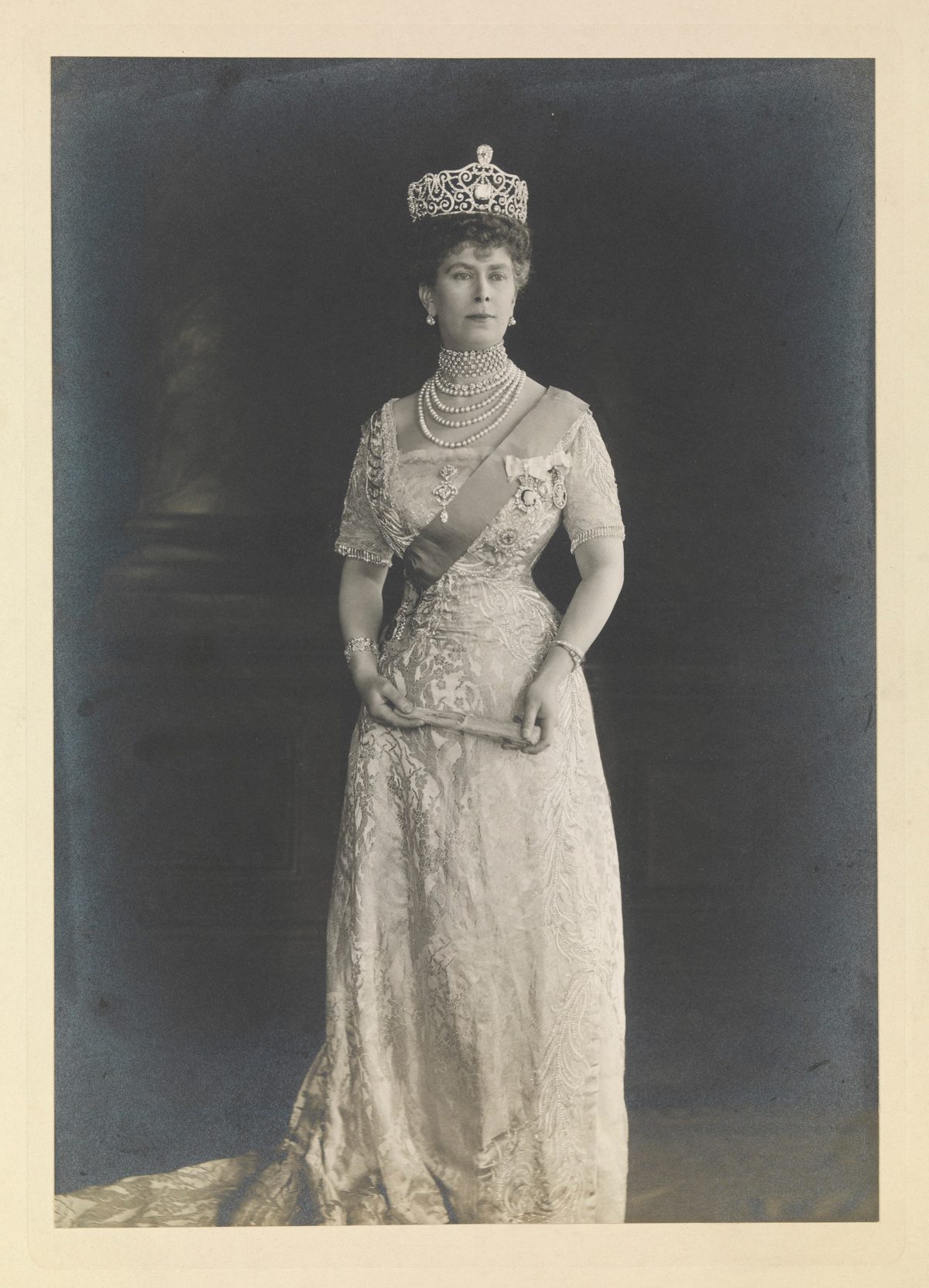
She had buried a husband, survived two world wars, and raised a king. But nothing prepared Queen Mary for the morning her eldest son walked away from the crown. What she did next — with quiet, unshakeable dignity — defined her more than any coronation ever could. On a crisp December morning in 1936, Queen Mary picked up the newspaper, her practiced fingers delicately turning the pages, only to find herself confronted by colossal headlines that would change the very fabric of her life: her beloved son Edward VIII had abdicated the throne. For a woman who had borne the responsibilities of the monarchy for decades, this news was not delivered by palace officials or confided in the privacy of royal chambers, but in stark print for all of Britain to read.
The Storm Brewing in the Heart of the Monarchy
The year 1936 had been a tumultuous one for the British monarchy. King George V had passed away in January, leaving the throne to his eldest son, Edward. However, Edward's reign was marked with personal challenges that soon became enmeshed with matters of state. His desire to wed Wallis Simpson—a twice-divorced American—caused consternation among government officials and the Church of England, complicating his role as king.
Within the polished corridors of Buckingham Palace, whispers turned into worried discussions. Queen Mary, a woman of formidable presence and regulation, was no stranger to the rules and traditions of royalty. Having lived through turbulent times, she knew the weight of a crown more intimately than most. Yet, despite her proximity to the epicenter of the crisis, Mary was kept at arm's length from the unfolding drama. The monarchy and its duties, eternally intertwined with her sense of self, were experiencing an upheaval she could scarcely comprehend.
A Morning in December
When Queen Mary learned of her son’s decision to abdicate, it was not among trusted aides in the confines of palace walls, but from the resolute text of a broadsheet. Her reaction perfectly encapsulated the grace and composure that defined her public life. She absorbed the news with the poise one might expect from a woman who had been a queen consort and a guiding hand through the trials faced by King George V, her late husband. As headlines screamed out scandal and betrayal, Mary read every word with silent fortitude. It was a pivotal moment that tested her resolve and spirit, yet the queen was unyielding. With ritualistic precision, she dressed, pinned on her trademark pearls, and prepared to face the world, each step a testament to her inner strength.
As she made her way through the familiar halls of the palace, Queen Mary readied herself to meet her second son, Albert—who would soon become King George VI. The transition of power was indeed seismic, but Mary realized that the continuity of the monarchy had to be upheld. The abdication crisis was not just about a throne; it was a reckoning with public duty, personal sacrifice, and the steadfast legacy she would one day leave behind.
The People’s Matriarch
Queen Mary’s response to the abdication crisis was more than personal resilience; it represented her investment in the monarchy's future and public trust. She faced the events not as an affront but as a duty to navigate gracefully. Her life, entwined with the crowns, scepters, and rites of royal service, demanded nothing less. But more than ceremonial roles, Mary was the embodiment of decorum—a bridge to a public reeling from royal turbulence.
The abdication and subsequent ascension of King George VI required a delicate transition, which saw Mary offering unwavering support to her second son and his newfound responsibilities. Known for her succinct expressions, her reassurance and guidance helped solidify esteem for the monarchy during challenging times. Her poise in doing so rendered a legacy far stronger than the ordeal itself—a binding force across generations.
Reflections on Royal Duty
In the aftermath of the crisis, it becomes clear how Queen Mary's steadfastness is a lesson in duty transcending personal tribulation. As a mother, queen consort, and later as the queen mother, Mary's place in the history of the British monarchy is profound. Her influence and vigilance supported a familial, public, and institutional armature of resilience and adaptation.
Understanding Queen Mary’s actions provides a lens through which contemporary admirers of the royal family can appreciate the importance of duty, adaptation, and strength. Though the nature of challenges faced by today's royals might differ, their foundational values remain tethered to those historic responses exemplified by leaders like Mary. Her grace under pressure offers wisdom on how honor and dedication can guide anyone through uncertain times, reminding us—royal or not—of the inner fortitude we might possess deep within ourselves.
By spending her final years within the comforting traditions of royal life that she had helped shape, Queen Mary left a legacy that speaks to the enduring strength, commitment, and elegance of Britain’s royal institution—a guiding light through the pages of history, right to modern day.
📷 Photo: John Thomson. CC BY 4.0 via Wikimedia Commons.