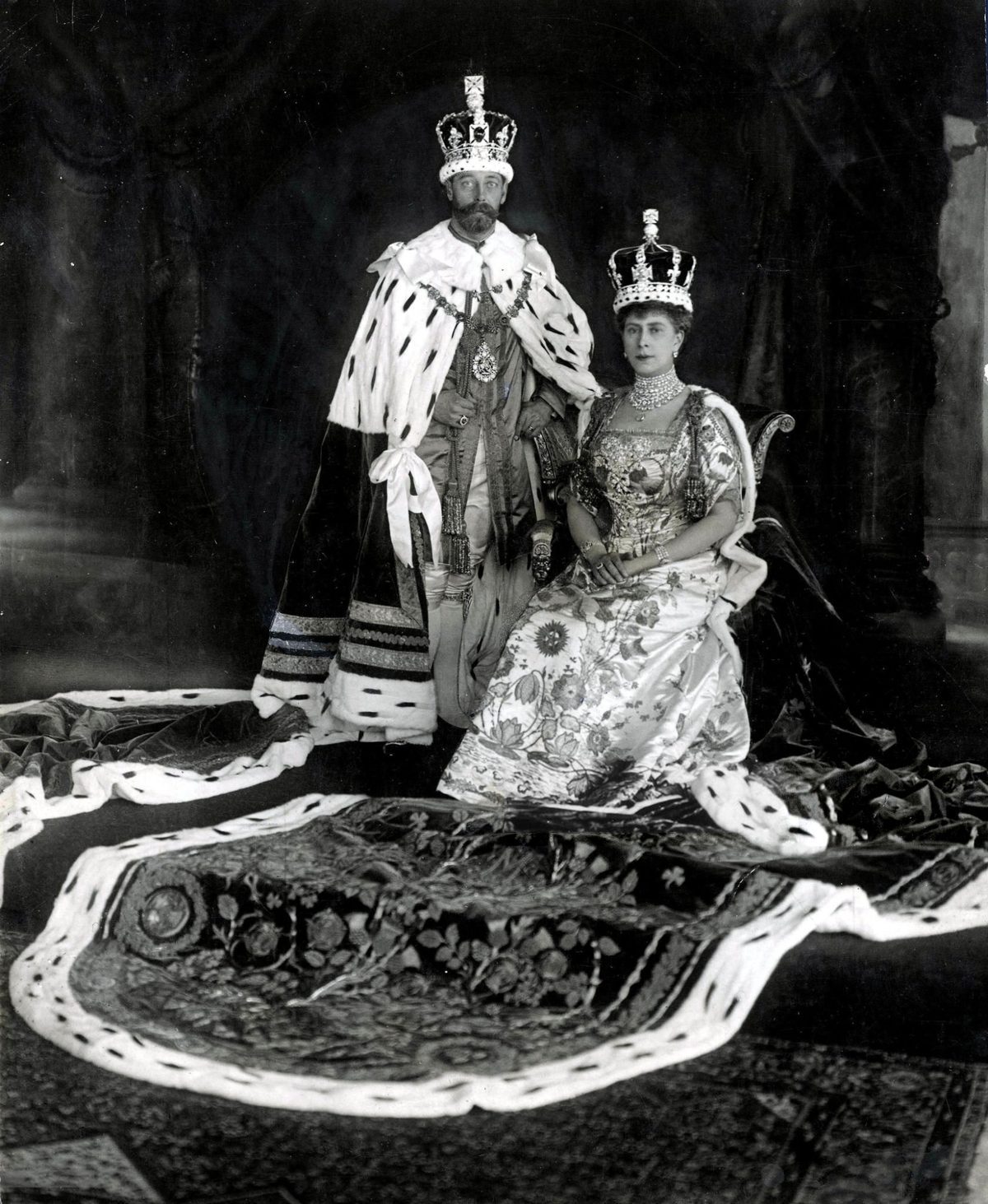
The dawn of May 12, 1937, promised change and renewal in the grand halls of Westminster Abbey. Amidst gilded relics and ancient echoes, England was ready to crown its new king, George VI. As noble dignitaries filled the cathedral with whispers of a new era, one figure emerged, drawing every eye with serene composure. It was Queen Mary, the monarch’s mother, who arrived not as a shadowed mourner of past tribulations but as an emblem of defiant majesty. Draped in a gown of ice-blue silk, she embodied resilience, a quiet powerhouse bespeaking the unyielding spirit of the British monarchy, whose grandeur had to be on full display to comfort a nation poised on the precipice of war.
The Woman Who Stood Behind the Crown
Queen Mary, consort to King George V and the matriarch who guided her family and country through turbulent tides, was no stranger to the demands of the crown. Born into minor royalty and betrothed at a young age, she learned early the delicate dance of duty and dignity. By 1937, her life had been a crucible of personal and public trials, most notably her son Edward’s abdication, which thrust her younger son Albert onto the throne as George VI.
Mary's presence at the coronation was paramount — a role she had navigated with poised elegance. She remained a stoic witness to the balance of traditions upheld and new pathways tread. Her steadfast nature was not only her guiding force but also formed the bedrock upon which her children leaned. Her choicest accessory that day was not her jewels but her unwavering grace and the ice-blue silk gown which contrived a narrative of hope and continuity.
The Gown: An Ice-Blue Symphony
In the spectacle of royal fashion, the gown worn by Queen Mary was much more than a sartorial choice; it was a statement. Designed in ice-blue silk, it was a color that symbolized serenity and fortitude. This choice was both a reflection of the tranquility that Mary possessed and the calm assurance she imparted to the nation. In an era where the blues of courtly palettes were reserved for mourning, Mary reimagined the hue to reflect resilience and defiance, showcasing it with a confident, almost regal audacity.
Embellished with jewels set in meticulous detail, the gown shimmered as Mary moved, catching the soft glow of the Abbey's ambient light. Intricate craftsmanship went into its creation, with every stitch whispering of Britain’s storied past and hopes for a peaceful future. It was a piece of art that spoke directly to the heart — a beacon of glamour in an otherwise gray world teetering on the brink of war.
A Tiara That Lit the Way
Completing the ensemble was the dazzling tiara perched upon her head, liberally studded with diamonds that encapsulated every beam of light in Westminster Abbey. The tiara was more than just a crown; it was a metaphorical lighthouse guiding the British people through stormy seas, echoing strength, illuminating elegance, and enhancing her stature as both queen and mother.
Centuries old, the tiara spoke of legacy and tradition, a treasure passed down through generations, yet worn with the relevancy and defiance of modernity. To the hundreds gathered within the abbey and the millions listening worldwide, it shimmered with the light of stability and continuity, a luminescent assurance that no matter what challenges lay ahead, the monarchy would endure.
A Steading Presence in Tumultuous Times
Queen Mary’s ensemble was more than visually arresting; it served as a steadying presence. At a time when Europe was on the cusp of another devastating conflict, the monarchy had to project not only pomp and ceremony but unity and nationalism. The fabric she donned, the tiara she wore, and her commanding presence quelled uncertainties, soothing a nation anxious about its future.
No stranger to hardship, Mary had watched her kingdom grapple with war and witnessed seismic shifts in society. She understood her role not merely as the mother of a king but as a steadfast figurehead for whom grace under pressure was paramount. Her sartorial splendor was more than opulence; it was duty fabric woven into history, a timely reminder of the resilience and continuity of the British spirit.
The Legacy of Queen Mary's Fashion
The sartorial choices of Queen Mary in 1937 resonate even today when the wardrobe of a royal becomes an emblem of influence and aspiration. Her ice-blue gown transcended its time, marking a profound statement about strength in the face of upheaval. The gown served as aesthetic diplomacy, reinforcing themes of stability and heritage while inviting hopeful observation of a bright yet challenging horizon.
For modern enthusiasts of royal history, the image of Queen Mary in blazing silk remains a testament to the majesty of the British monarchy — a beacon that continues to inspire the royal fashions of today. Her story is a reminder of the gown’s transformative power to shape narratives and express the unuttered with searing eloquence.
And so, Queen Mary stood in Westminster Abbey in 1937 as much more than the mother of a new king. She was a woman embodying the entirety of her century, revealing through her sartorial choices an indomitable presence that modern royal audience still recalls with reverence and admiration. The ice-blue gown and glittering tiara endure in memory, lighting a path from the past to today, whispering of resilience, regality, and renewal for the future.
📷 Photo: W. & D. Downey. Public domain via Wikimedia Commons.