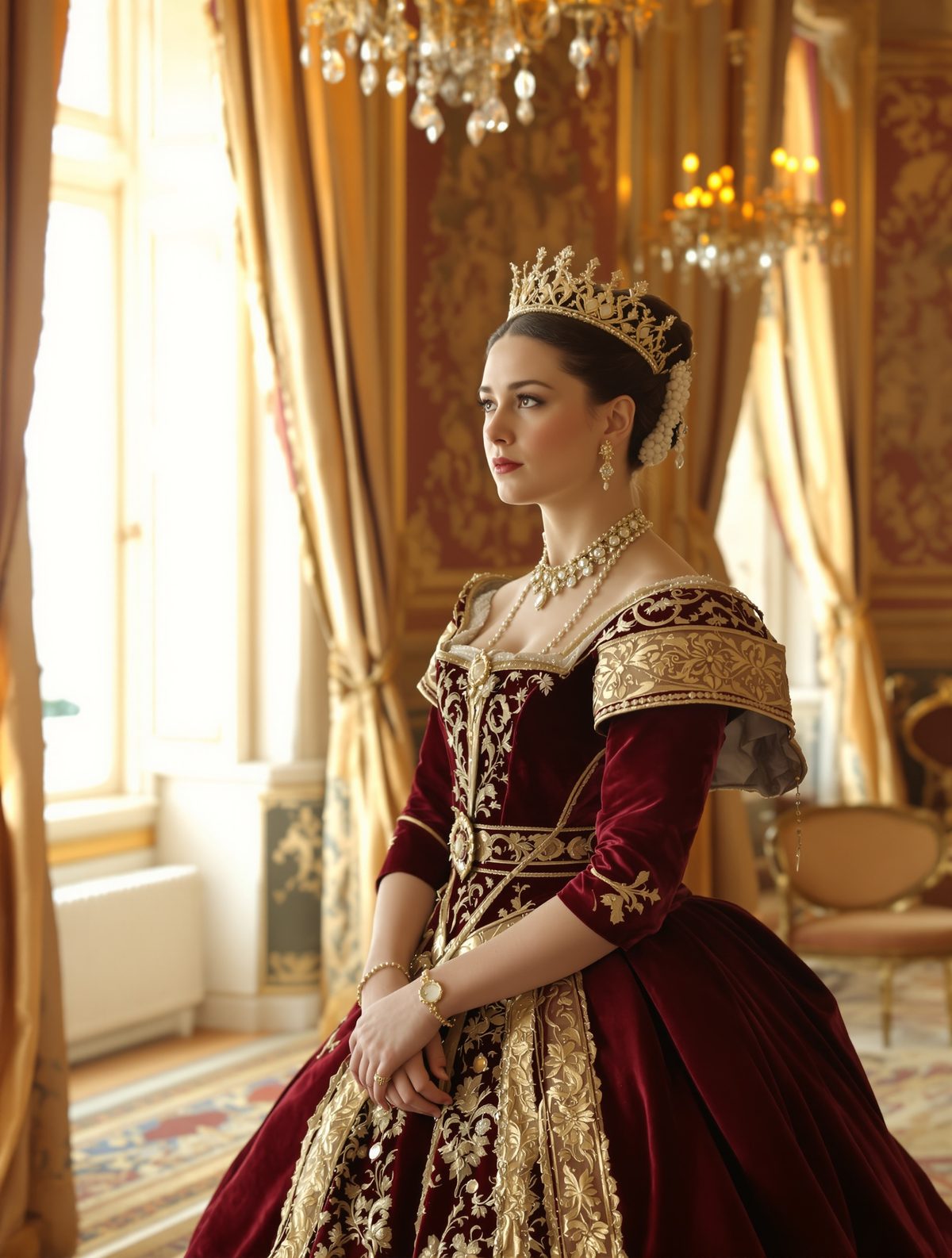
Picture the scene: Windsor Castle, October 1839. A twenty-year-old queen paces her private apartments, her silk skirts rustling against the Persian carpets. Outside her windows, autumn leaves dance in the crisp air, but Queen Victoria barely notices. Her mind is consumed by an unprecedented dilemma that would test the very foundations of royal protocol. In just a few hours, she would summon her beloved cousin Prince Albert and do something no British queen had ever done before—propose marriage while literally getting down on one knee.
A Constitutional Crisis of the Heart
Queen Victoria's predicament was unlike any romantic challenge faced by ordinary couples. As the reigning monarch, she existed in a unique position where traditional gender roles collided spectacularly with constitutional requirements. In Victorian society, the very notion of a woman proposing to a man was scandalous enough to raise eyebrows in even the most progressive drawing rooms. But for a queen, the situation was infinitely more complex.
Constitutional law was crystal clear: no one could propose to the sovereign. The Crown's dignity and the delicate balance of royal prerogative demanded that marriage proposals flow from the throne, not to it. This wasn't merely about etiquette—it was about power, sovereignty, and the careful choreography that had governed royal marriages for centuries.
Victoria had been aware of this constitutional requirement since her accession in 1837, but it had remained an abstract concept until Prince Albert of Saxe-Coburg and Gotha arrived at Windsor Castle on 10th October 1839. Her German cousin, whom she had met briefly three years earlier, had grown into a strikingly handsome young man with intelligent blue eyes and an earnest demeanor that immediately captivated the young queen.
The Prince Who Conquered a Queen's Heart
Prince Albert was everything Victoria had dreamed of in a husband, though she had scarcely dared to hope such perfection existed. Tall and athletic, with a passion for music, art, and intellectual pursuits, he possessed both the physical beauty and refined mind that appealed to the romantic young queen. Unlike many of the European princes who had been paraded before her as potential suitors, Albert treated her not as a political prize to be won, but as a woman worthy of respect and genuine affection.
During his visit to Windsor, Albert charmed the entire court with his grace and intelligence. He danced beautifully, conversed knowledgeably about literature and politics, and demonstrated a musical talent that left Victoria utterly enchanted. When he played the piano or sang German lieder in his melodious voice, the queen found herself completely spellbound.
What made Albert particularly suitable as a royal consort was his understanding of his position. Unlike some foreign princes who might have sought to dominate a queen wife, Albert approached the situation with appropriate deference while maintaining his dignity. He had been carefully educated by his uncle, King Leopold of Belgium, about the unique requirements of being married to a reigning queen.
A Queen's Internal Struggle
Victoria later confided to her journal about the internal turmoil she experienced as her feelings for Albert intensified. The typically decisive young queen found herself uncharacteristically uncertain. She was deeply in love, but the weight of her position made even this most natural of human emotions feel complicated and fraught with protocol.
Her advisors, including the Prime Minister Lord Melbourne, had delicately suggested that Albert would make an excellent choice, but they couldn't push too hard—the decision had to appear to be entirely the queen's own. The careful balance of appearing to choose freely while following constitutional requirements required extraordinary diplomatic finesse from everyone involved.
The Momentous Decision
After several sleepless nights of deliberation, Victoria made her choice. On 15th October 1839, she summoned Prince Albert to a private audience in her Blue Closet, a intimate sitting room overlooking the castle gardens. What happened next would become one of the most romantic moments in royal history, even as it shattered centuries of conventional romantic protocol.
According to Victoria's own account in her journal, she told Albert of her feelings and asked him to marry her. While the exact details of how she physically presented the proposal remain somewhat uncertain, royal historians have long maintained that she did indeed follow the traditional gesture of proposing on one knee—a remarkable image of a queen literally humbling herself before the man she loved.
Albert's response was everything Victoria could have hoped for. He accepted with genuine joy and emotion, expressing his deep happiness at the prospect of their union. The relief and euphoria Victoria felt in that moment was palpable in her journal entries, where she described feeling as though a great weight had been lifted from her shoulders.
Breaking the News
The announcement of the engagement created a sensation throughout Britain and across Europe. While some traditionalists were privately shocked by the breach of conventional protocol, the public response was largely positive. The British people had grown fond of their young queen, and the prospect of a royal wedding brought genuine excitement to the nation.
Victoria's proposal to Albert represented more than just a personal romantic gesture—it symbolized a subtle but significant shift in how royal marriages might be approached. While still operating within constitutional requirements, the queen had managed to inject genuine personal choice and romantic feeling into what had traditionally been purely political arrangements.
A Love That Transformed the Monarchy
Victoria and Albert's marriage, which took place on 10th February 1840, would prove to be one of the great royal love stories. Their union produced nine children and established a template for royal domesticity that influenced monarchies across Europe. More importantly, it demonstrated that constitutional requirements and genuine romantic love could coexist beautifully within the framework of royal duty.
The success of their marriage validated Victoria's brave decision to break with romantic convention. Albert proved to be not just a devoted husband but an invaluable partner in governance, helping to modernize the monarchy and champion important causes like education and industrial innovation.
Their relationship also influenced how future generations would approach royal marriages. While arranged marriages continued among European royalty, Victoria and Albert's example showed that compatibility, mutual respect, and genuine affection could create a stronger foundation for royal unions than political convenience alone.
Today, as we witness modern royals like the Prince and Princess of Wales navigating their own paths between tradition and personal choice, we can trace a direct line back to that October afternoon when a young queen chose love over convention. Victoria's courage to propose to Albert on her own terms reminds us that even within the most rigid protocols, there remains room for authentic human emotion and personal agency. In breaking every rule about how royal proposals should unfold, Queen Victoria ultimately created a new template for how the monarchy could embrace both duty and genuine happiness—a legacy that continues to inspire royal romance more than 180 years later.