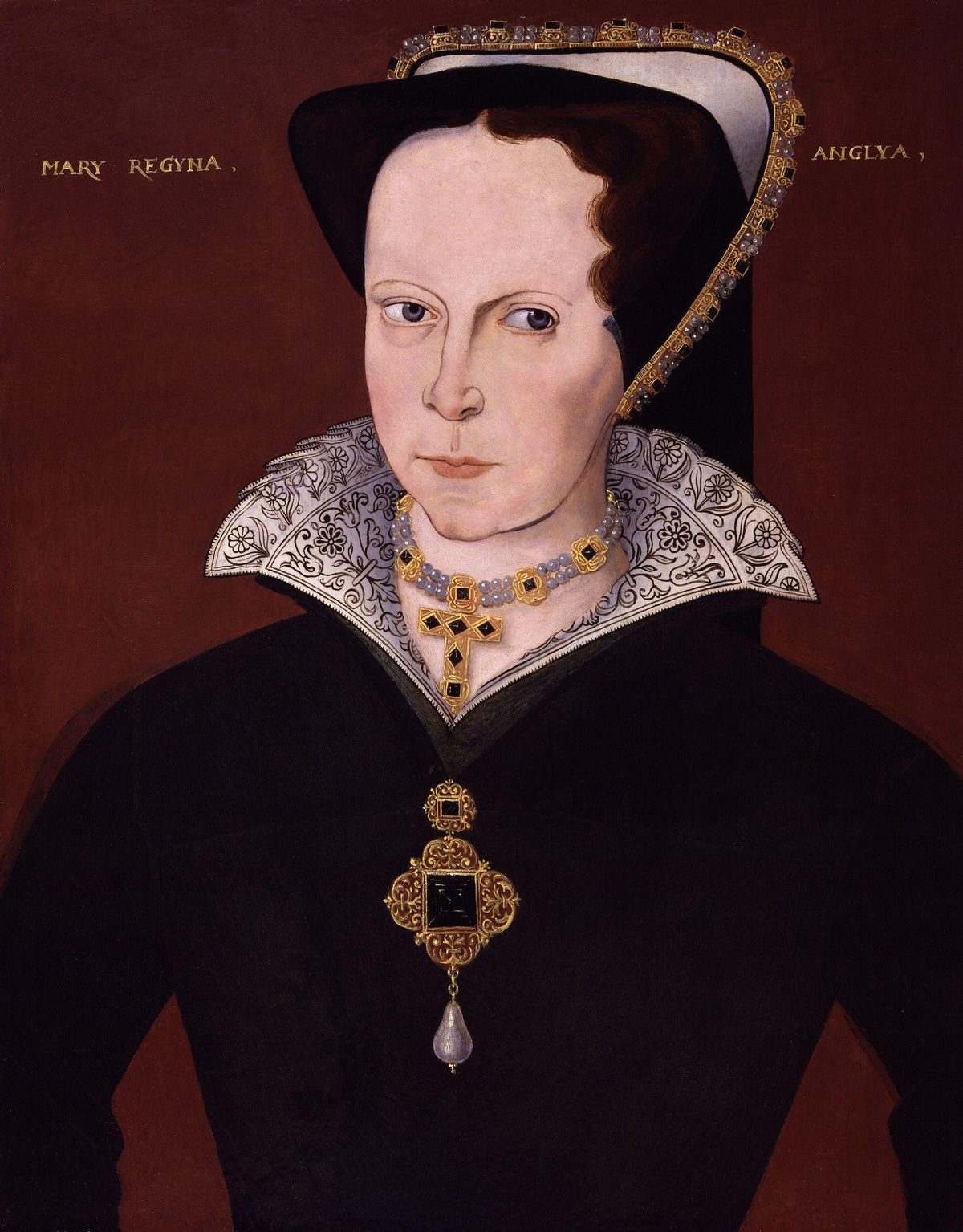
The air was thick with the gravity of history and the specter of the end. It was November 1558, and in the dim, echoing halls of St James's Palace, England's Queen Mary I lay dying. Her attendants held their breath, expecting her final words to be prayers for her beleaguered soul or a tender farewell to her faith and family. But Mary, known to some as 'Bloody Mary,' had a different message. In her final moments, she whispered, “You will find Calais written on my heart.” With this, she left a poignant mark on the history of a dynasty that has fascinated generations. These words weren't just about a lost territory—they were an admission of a monarch's grief and perceived failure.
The Burden of a Crown
Mary I of England, the first woman to successfully claim the throne as a reigning queen, inherited a tumultuous kingdom. The weight of her title bore down on her, shaped by the turbulent legacy of her father, Henry VIII, and the fierce Protestant reforms instigated by her brother, Edward VI. Though hailed as a triumph for female rule, her reign was marred by challenges that would shake even the sturdiest of monarchs. Contending with religious division and political strife, Mary sought to reconcile her domain with her fervent Catholicism and her desire to restore England to Roman papal allegiance.
The burdens of a crown have always been immense, but Mary's throne held thorns within it. Her efforts to re-establish Catholicism led to the Marian Persecutions, a dark chapter in England's history that earned her the contentious sobriquet 'Bloody Mary.' Her guiding light throughout her reign came from her faith and a profound sense of duty to her realm and ancestors. Yet, as her health deteriorated, it was not her legacy of religious fervor that preoccupied her thoughts, but rather, the loss of Calais—the last vestige of England's once-great French possessions.
Calais: A Historic Loss
Calais, England's foothold in France since 1347, was not merely a tract of land—it was a cherished jewel in the crown, a symbol of England's power across Europe. For more than two centuries, Calais had stood as a salient reminder of English resilience and ambition. When it fell to the French in January 1558 during Mary's reign, the loss was more than strategic; it was profoundly personal for the queen who had hoped to reinforce her father's and grandfather's legacies.
While Mary was not directly involved in military failures—limited by the expectations and constraints on female rulers of the time—she bore the brunt of the emotional and symbolic defeat. The loss was exacerbated by Mary's deep-seated belief in divine providence; to her, the fall of Calais might have seemed a sign of disfavor from the heavens. These profound feelings of shame and failure are encapsulated in her haunting final words, words that seemed to bind her fate with that of a vanished territory.
The Last Hours at St James's Palace
The final days of Queen Mary I were spent at St James's Palace, surrounded by her loyal servants and attendants. As with many monarchs, her death was a closely-watched affair, shrouded in the solemnity and ceremony worthy of a Tudor monarch. Here, Mary confronted her mortality amidst the opulent trappings of power, a setting that had been witness to both her trials and triumphs. Although her body was failing, Mary's mind remained a resolute bastion of thought, focused not on the spiritual or personal, but on her enduring national concern—Calais.
As the sands of time slipped away, those closest to her saw no grand gestures of reconciliation or impassioned exhortations of her faith. Instead, her poignant reflection was on what she perceived as her failure, underscoring the depth of her care for her realm and how intertwined her identity was with that of her kingdom. Her mournful acknowledgment of the loss that forever clouded her reign betrayed the heart of a ruler deeply invested in her country’s status and future.
The Legacy of Mary I
Mary I's reign was one of complexity, deviating from the tumult of the Reformation to the shadowed intrigue of royal courts. Her legacy is multifaceted—seen as both a resolute sovereign and a symbol of religious strife. However, her final words transform her into a much more human figure. Here was a queen whose spirit and courage to rule shouldered an immense, solitary burden, challenging notions of femininity and power in a male-dominated world.
Mary's lamenting over Calais provides insight into the intimate struggles of a monarch at the dawn of modern Europe. The poignancy of her statement endures through history, offering a rare glimpse into the vulnerabilities behind the royal façade. It was more than just a loss of land; it was the weight of expectations unmet, the crumbling of a long-held English dream, and the end of an era.
Echoes of the Past
In the pursuit of understanding the legacy of the British monarchy, the story of Queen Mary I offers a compelling narrative on leadership's human element. Centuries later, her whispered words from a candle-lit bedchamber remind us of the ceaseless devotion that characterizes monarchy's dedication to duty—an ideal that continues to inspire admiration and respect today. The themes of loss, identity, and legacy resonate profoundly, transcending the chasm of time and connecting a Tudor queen with modern audiences.
While history may remember kings and queens for their grand victories or ignominious defeats, it is the personal journeys that stitch together the grand tapestry of royal heritage. Mary's reign, highlighted by its human story of ambition and sorrow, provides a touchstone for those who appreciate the enduring mystique of monarchy. Amidst the echo of her reign, her final words linger—forever entwined with the soul of a queen and the history of her nation.
📷 Photo: Unknown authorUnknown author. Public domain via Wikimedia Commons.