On November 17, 1558, as twenty-five-year-old Elizabeth Tudor prepared to receive the sacred symbols of English monarchy, nobody could have predicted that a seemingly minor mishap would bind her to the throne in the most literal sense imaginable. The coronation ring, meant to symbolize her marriage to England, would become her constant companion for the next forty-five years—not by choice, but by painful necessity. What began as ceremonial pageantry would transform into one of the most poignant symbols of royal duty ever recorded.
A Ceremony Gone Awry
Westminster Abbey had witnessed countless coronations, but Elizabeth I's ceremony on January 15, 1559, would prove memorable for reasons beyond its grandeur. The young queen, already displaying the steely determination that would define her reign, stood resplendent in cloth-of-gold as Bishop Owen Oglethorpe performed the ancient rituals that would transform her from princess to sovereign.
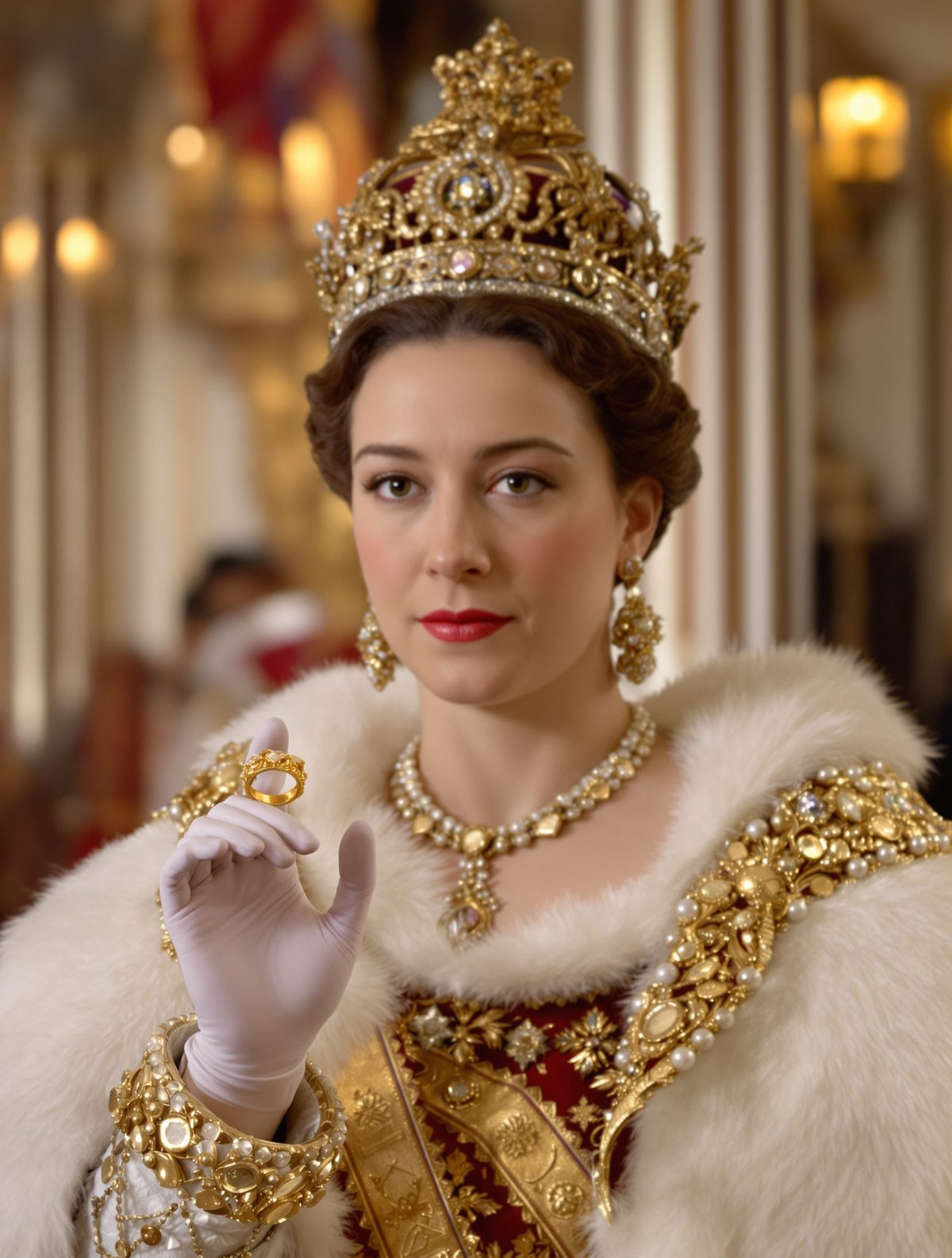
The coronation ring, crafted from heavy gold and set with precious stones, represented one of the ceremony's most sacred moments—the symbolic marriage between monarch and realm. This wasn't merely jewelry; it was a tangible representation of the unbreakable bond between crown and country. For centuries, English monarchs had worn similar rings as constant reminders of their sacred duty.
However, in the ceremony's elaborate choreography, something went terribly wrong. Whether due to the pressure of the moment, the complexity of the ancient ritual, or simple human error, the ring was forced onto Elizabeth's ring finger rather than her fourth finger where it properly belonged. The difference was crucial—the ring had been sized for the traditional finger, not the one where it now sat trapped.
Contemporary accounts suggest the mistake became apparent immediately, but with hundreds of nobles, foreign dignitaries, and church officials watching, there was no opportunity to correct the error. The ceremony continued, but Elizabeth now bore a ring that was far too tight, cutting into her flesh with every movement.
The Physical and Emotional Burden
What followed was nearly half a century of constant discomfort that Elizabeth bore with characteristic stoicism. The ring, beautiful though it was, became a source of daily pain as it pressed into her finger, restricting circulation and causing swelling. Court observers occasionally noted how the queen would unconsciously massage her hand or rotate the immovable band.
Yet Elizabeth refused all suggestions to have the ring cut off. This wasn't merely stubborn pride—though the queen certainly possessed that quality in abundance. For Elizabeth, the ring had transcended its physical form to become something far more significant. Despite the pain it caused, she viewed its permanent presence as a tangible reminder of her sacred vows to England.
The queen's personal physician and various courtiers reportedly offered solutions over the years. They suggested filing the ring carefully, using oils to ease its removal, or even temporarily numbing the finger to slide it off. Elizabeth rejected every proposal. The ring had become part of her identity as England's sovereign, and she would not diminish that connection for the sake of personal comfort.
The irony was not lost on those closest to the queen. Elizabeth, who famously declared herself married to England and rejected numerous suitors to maintain her independence, was literally bound to a ring that symbolized that very marriage. The Virgin Queen, as history would remember her, wore the most meaningful wedding band in English history.
A Symbol of Unwavering Duty
As the decades passed, the ring's significance only grew. Through the Spanish Armada's threat in 1588, the religious upheavals that defined her reign, and the countless political crises that tested her resolve, Elizabeth's coronation ring remained her constant companion. It survived every challenge that faced the Tudor dynasty, becoming as enduring as the queen herself.
The ring's permanence seemed to mirror Elizabeth's approach to monarchy itself. Just as she could not remove the band from her finger, she could not separate herself from her royal duties. Even during illness or political pressure, Elizabeth maintained that her commitment to England was absolute and irrevocable.
Foreign ambassadors and visiting dignitaries often remarked on the ring, though few understood the full story of its origin. Some interpreted its constant presence as evidence of Elizabeth's mystical connection to her realm, while others saw it as a clever political symbol of her unwavering dedication to England's interests.
The queen's ladies-in-waiting grew accustomed to her careful movements to protect the increasingly sensitive finger. They learned to assist with gloves and ensure that ceremonial activities didn't aggravate the ring's position. In many ways, the entire court adapted to accommodate this small but significant aspect of their sovereign's daily reality.
The Final Chapter
When Elizabeth died at Richmond Palace on March 24, 1603, the ring had become so embedded in her finger that it had essentially become part of her physical form. After forty-five years of constant wear, the flesh had grown around the gold band, making removal impossible without significant intervention.
The delicate task of removing the ring fell to those preparing the queen's body for burial. Using careful filing techniques, they gradually worked away portions of the band until it could finally be freed from Elizabeth's finger. Even in death, the ring seemed reluctant to abandon the monarch it had served so faithfully.
The removed ring was preserved among the crown jewels, though its battered condition bore testimony to its decades of service. Unlike other ceremonial pieces that spent most of their existence in secure storage, Elizabeth's coronation ring had lived a full life, experiencing every triumph and tribulation of one of England's greatest reigns.
A Legacy Written in Gold
Today, as we witness modern royal ceremonies with their meticulous planning and rehearsal, Elizabeth I's coronation ring reminds us that even the most sacred traditions can be subject to human error—and human resilience. The young woman who stood in Westminster Abbey in 1559 could never have imagined that a moment's mistake would create such a lasting symbol of royal dedication.
Perhaps most remarkably, Elizabeth transformed what could have been simply an embarrassing mishap into something profound. Her refusal to remove the ring, despite decades of discomfort, demonstrated a level of commitment to royal duty that modern observers can barely comprehend. In our age of convenience and quick fixes, Elizabeth's acceptance of permanent discomfort for symbolic purposes seems almost impossibly noble.
The story resonates particularly strongly when we consider how contemporary royals approach their roles. Each generation finds new ways to balance personal comfort with public duty, but Elizabeth I's coronation ring represents perhaps the most literal interpretation of service before self ever recorded in royal history. Her willingness to carry that daily reminder of responsibility speaks to a depth of dedication that helped forge the very foundations of modern British monarchy.