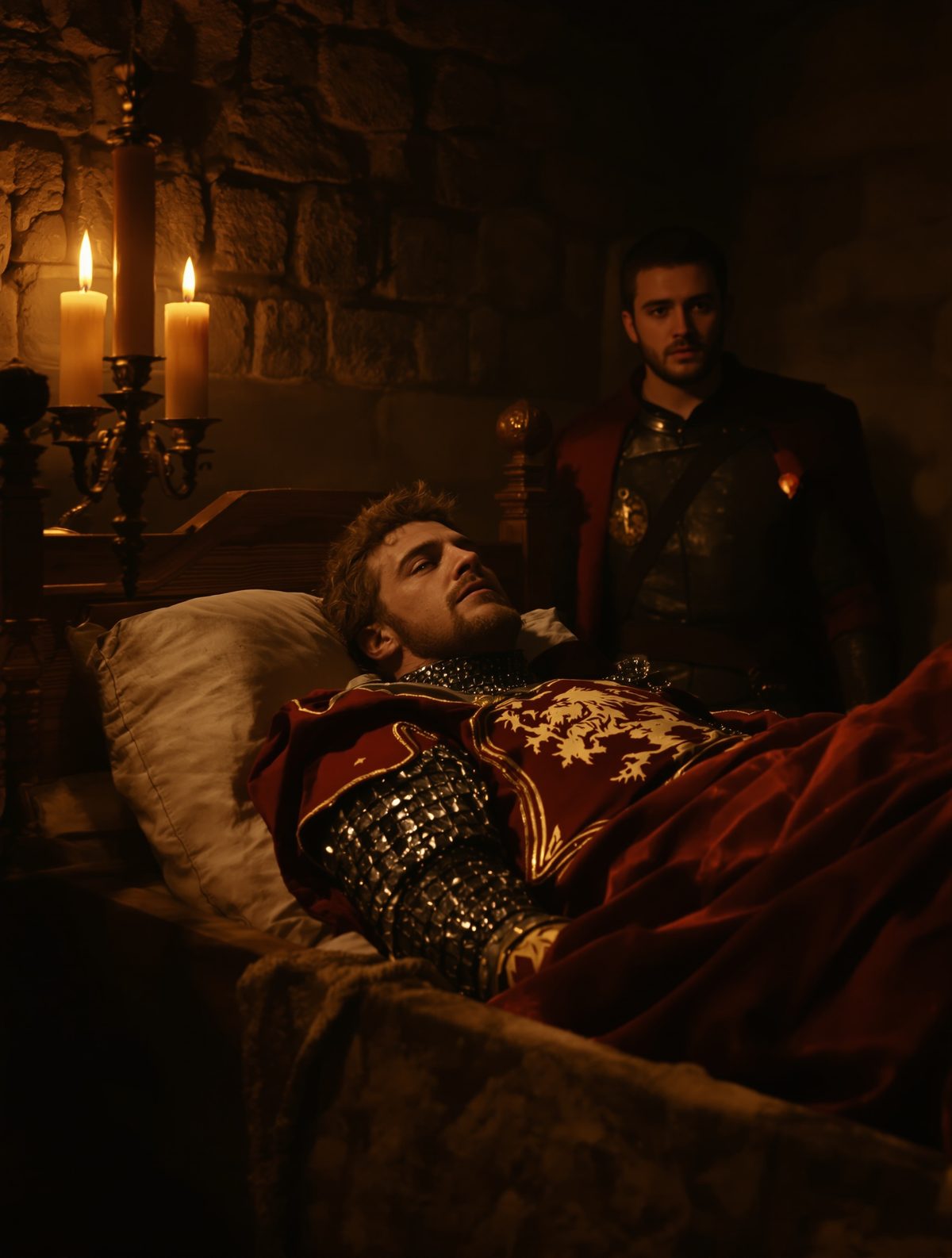
As the setting sun cast its waning light over the rugged landscape of Châlus-Chabrol, a castle in the Limousin region of France, the scene below was one of unfolding medieval drama. With forces gathered in tense anticipation, King Richard I of England, widely known as Richard the Lionheart, lay gravely wounded. The once-ferocious roar of battle was silenced by a solitary arrow that had punctured his royal armor. This singular act would become an unforgettable chapter in history, not only for its tragic ending but for an extraordinary demonstration of magnanimous mercy. The last breath of the courageous and formidable king carried with it a pardon that would echo through the ages.
The Legendary Warrior King
Richard I, a figure whose prowess and passions earned him the epithet "Lionheart," is a name carved in the annals of history as a symbol of medieval chivalry and military excellence. Ascending the English throne in 1189, his reputation was unmatched in Christendom as a valiant crusader. Though King of England, Richard spent little time in his homeland, driven instead by the fires of the Third Crusade and his enduring loyalty to the cross.
While his exploits in the Holy Land cemented his legendary status, at heart, Richard was a knight before a king — a warrior imbued with the unwavering zeal of martial ambition. He commanded armies with tactical brilliance and faced the enemy on fields far from his native shores. Yet, as history reveals, the labyrinth of human fate and royal fortune can be both inspiring and tragic, as it was during the fateful siege at Châlus.
The Siege of Châlus — Valor & Vulnerability
The year was 1199, and King Richard found himself involved in a relatively minor conflict. The fortress of Châlus was a stubborn rock in a local land dispute against the Viscount of Limoges. A beleaguered and defiant garrison defended it, seemingly insignificant compared to the grand theaters of war Richard had previously engaged in. But a king's presence, even in a local skirmish, carried with it the gravity of sovereign authority and the splendor of majestic power.
During his inspection of the siege lines, fate intervened in a most unexpected way. Standing without a full armor plate, the king became an exposed target. An arrow, loosed from the crossbow of a young soldier named Pierre Basile, struck the king's shoulder. Initially non-lethal, infection soon set in, and his condition rapidly deteriorated.
The Young Crossbowman and a Moment of Clemency
As King Richard lay weakened and pallid, word spread quickly across the camp. The captor of countless hearts and leader of mighty crusades, now at the precipice of mortality, was about to demonstrate the greatest of human virtues: forgiveness. The world watched, holding its breath for what was to come as Richard requested an audience with the boy whose arrow now defined their shared destiny.
Brought before the king, the young crossbowman awaited a fate likely sealed by the gallows. Instead, Richard, with the remaining strength of a true lionheart, engaged not in vengeance but in compassion. With a royal pardon announced to those gathered, he forgave Pierre Basile completely, sparing him of any punishment. It was an act of mercy that left the room silent and stunned, a poignant testament to the complexities of a king who knew glory and humility in equal measure.
The Final Act of a Great Lion
The King's forgiveness was a profound echo that lingered over his final moments. As the infection claimed him, Richard appointed his loyal comrade, William Marshal, as the guardian of his kingdom. The loss of Richard in 1199 was deeply felt, rippling through the courts of Europe and the Holy Land.
To the realms over which he had dominion, he bequeathed not only a vast trove of conquests and a storied life but also an enduring image of a ruler whose heart was as mighty as his sword. The act of clemency became part of his illustrious legacy, underlining the human dimensions of leadership amidst the ceaseless tides of power and ambition.
The Enduring Legacy of Richard the Lionheart
King Richard I’s legacy extends far beyond his warrior repute. It embodies the ideals of chivalry that continue to hold sway over modern concepts of leadership and morality. His tale resonates with lessons — that strength is often found in vulnerability, and that greatness is measured as much by one's compassion as by conquest.
Today, as modern monarchies navigate the complex waters of public expectation and historical precedence, Richard's story serves as a bridge between the past and the present. His life reminds us of the enduring power of forgiveness, a royal virtue that transcends the centuries, speaking to the best within human nature and the promise of redemptive grace. Our fascination with the royals is ever-present — a reminder that in the loom of history, it is often the gestures of the heart that leave the most lasting mark.