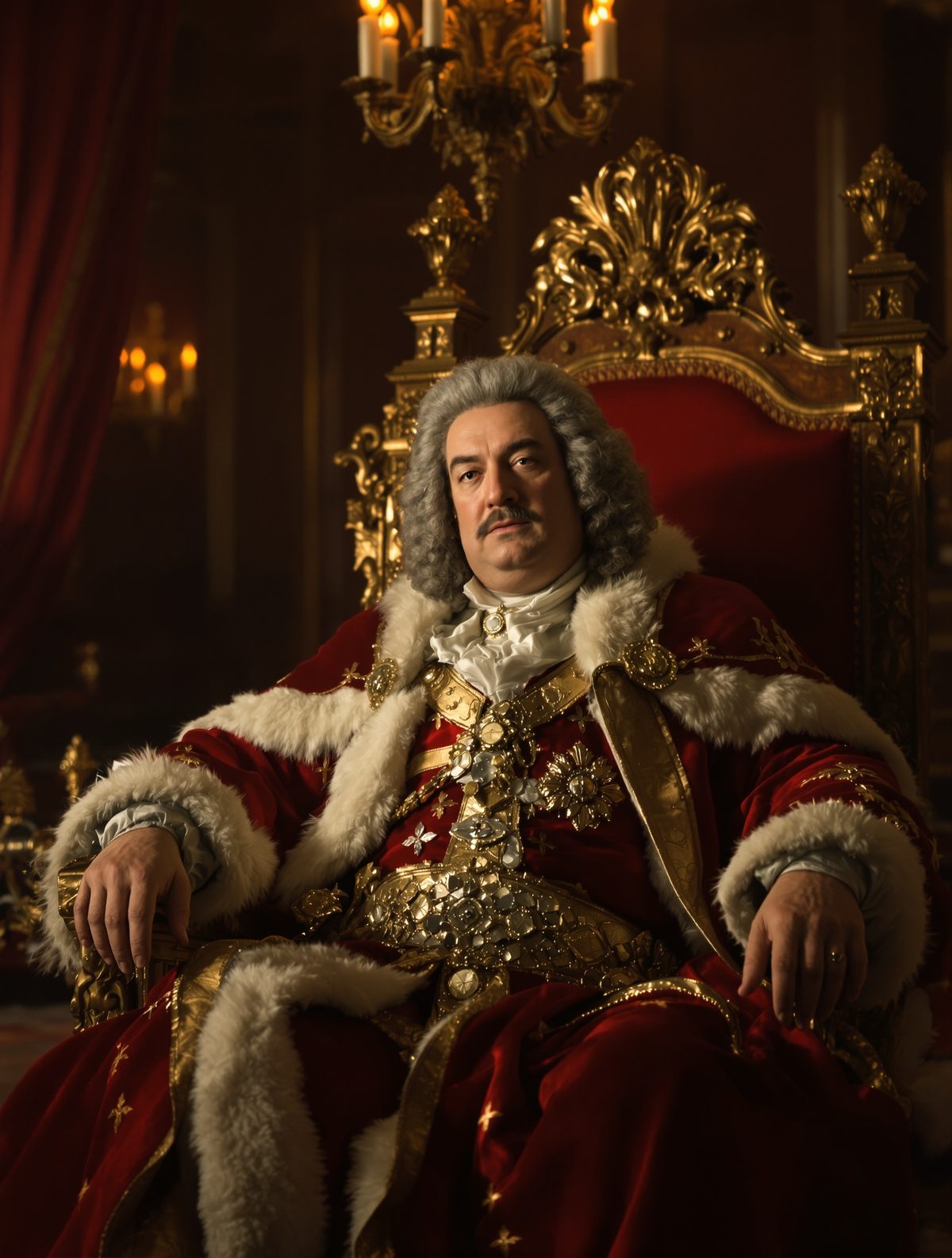
In the autumn of 1714, a curious spectacle unfolded at Westminster. The arrival of King George I marked not just a new era — the Georgian era — but also a linguistic and cultural rupture in British monarchical history. With trumpets and bagpipes heralding his entry into Parliament, this king, newly crowned, was a stranger to the land he was to govern. Hailing from the Hanoverian lands of Germany, George I embodied the perfect paradox — the head of the British state, yet barely able to speak its language. As he stood before Parliament for the first time, he addressed the assembled members not in English, but in Latin, setting the stage for a remarkably unique reign.
The Accidental King
Nobody expected Georg Ludwig, Elector of Hanover, to mount the British throne. His ascension was primarily the result of the 1701 Act of Settlement, passed by a Parliament eager to ensure a Protestant succession. This law bypassed dozens of closer Catholic relatives to the throne, placing George in the peculiar position of being England's unlikely monarch.
George I's ascent also highlighted the intricate web of alliances and fears that characterized 18th-century European politics. Britain, wary of French influence and Jacobite claims, saw in George a safe Protestant candidate who could stabilize a nation's tumultuous succession landscape. Yet, his German upbringing meant that he arrived in Britain more as a foreign dignitary than a beloved king, far more acquainted with the swirling courts of Hanover than the pomp of Whitehall.
Courtly Challenges and Cultural Clashes
King George I's court became a microcosm of his complex identity — teetering between the familiar traditions of Hanover and the expectations of his new British role. His retinue was a testimony of this duality. Among his companions were his two trusted mistresses, Melusine von der Schulenburg and Sophia von Kielmansegg, whose presence sparked chatter and fascination in the English court. They accompanied him along with a captivatingly unusual figure, Mustafa, his Turkish servant, who intrigued and sometimes scandalized the corridor gossip of London.
The courtly life of Britain, used to decades of dynastic stability under the late Stuart monarchs, found itself adapting to new customs. Simple dinners, rather than grand feasts, marked the Hanoverian influence. George's preference for spending time with fellow Germans incited suspicion from those eager for royal favor, as language barriers estranged him further from his English courtiers.
Parliamentary Predicaments
Perhaps the most vivid illustration of King George's linguistic struggles lay in his interactions with Parliament. During his inaugural speech, translated to the bewilderment of many MPs, George set the tone in Latin, which was more comprehensible to the courts of European diplomacy than to the British political elite. The language of imperial Rome provided a bridge of sorts, a common tongue when the king's German found no resonance in the English halls of power.
This linguistic divide extended even to his most critical political relationship — with his ministers. Chief among them was Robert Walpole, who would later become Britain's first de facto Prime Minister. The language barrier forced a greater reliance on intermediaries, creating a unique dynamic where the king acted more symbolically, allowing his ministers greater agency in governance. In a way, this necessity seeded the evolution of a modern parliamentary system.
The Human Story
Beneath the hallmarks of statecraft and ceremony, King George I's reign is also a profoundly human story of an outsider in an unfamiliar land, trying to find footing amidst towering expectations. He grappled with emotions and experiences familiar even today — the anxiety of establishing oneself far from home, the pain of familial discord with his estranged wife Sophia Dorothea of Celle, and the joy found in familial relations, especially with his daughter Sophia Dorothea of Hanover.
Despite the linguistic chasm, George I's reign became notable for its relative peace and foundation for Britain's eventual bounty under his son's reign. His legacy, tinged with struggles of communication, underscored a Britain that was diversifying beyond its insular past towards a broader European kinship.
The Monarchical Mosaic
Today, as we look back on the reign of King George I, we see not merely the echoes of a distant past but also a mirror reflecting contemporary themes of cultural integration, language barriers, and evolving political structures. His story reassures us of the monarchy's adaptability and resilience, key traits that have helped sustain its relevance through every twist and turn of history.
A sovereign who couldn’t converse fluently with his subjects might seem strange to twenty-first-century eyes, yet George's story questions us: is leadership defined solely by communication? Or can it be shaped by the adaptation, resilience, and the interweaving of diverse cultural strands? King George I's reign offers a testament to the latter, inviting us to cherish this chapter of royal history where a non-English speaking king taught Britain the art of inclusive governance.
The Royal & Regal audience, undoubtedly enchanted by both the noble elegance of yore and the enduring legacy it leaves for modern monarchy, can celebrate George I as a pioneer of an evolving British identity — one that transformed its cultural tapestry, enriching it with new hues and dimensions that continue to unfurl even now.